
Locus Lock Raises Strategic Funding to Accelerate Access to Software-Defined GNSS
Range Ventures-led round with participation from In-Q-Tel supports broader deployment of resilient positioning
Press Release Disclaimer: This is a press release distributed through the XPR Media network. It has not been independently verified by our newsroom.


Locus Lock, a developer of software-defined GNSS technology for contested and degraded environments, today announced a strategic funding round led by Range Ventures, with participation from In-Q-Tel (IQT), Backswing Ventures, Aurelia Foundry, Techstars, Golden Seeds, Creations VC, POV Ventures and others.
This press release features multimedia. View the full release here: https://www.businesswire.com/news/home/20260924960551/en/
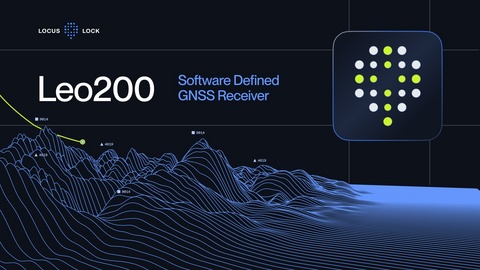
The company also announced the October 2026 launch of Leo200, its new software-defined GNSS receiver platform. The launch will make Locus Lock’s technology more broadly accessible to engineers building aerospace, defense and autonomous systems following years of development, customer deployments and field testing in real-world RF environments.
Aerospace and defense are rapidly shifting toward autonomous, distributed and increasingly software-defined systems. Across air, ground, maritime and space, more platforms depend on precise positioning to operate, while the economics of those platforms increasingly demand capabilities that can be deployed broadly and cost-effectively. Similar trends are reshaping mobility more broadly, from autonomous vehicles to robotics.
At the same time, reliable positioning is becoming harder to guarantee. GNSS jamming, spoofing and denial are increasingly prevalent in modern conflict, while the technologies used to disrupt satellite navigation continue to become more accessible and sophisticated. The result is a fundamental challenge: more systems depend on precise positioning while the RF environments they operate in are becoming more contested.
Locus Lock was built around the belief that addressing that challenge requires a different receiver architecture. Rather than tying GNSS capability to specialized hardware and multi-year redesign cycles, Locus Lock implements advanced GNSS signal processing in software on general-purpose compute, allowing positioning capabilities to evolve as threats, missions and platforms change.
“We’ve spent the past several years demonstrating Locus Lock in real-world RF environments with some of the top defense primes, putting the technology through the kinds of conditions our customers and partners face in the field,” said Hailey Nichols, founder and CEO of Locus Lock. “The threat is advancing at software speed, but the rest of the industry is still trying to counter it at hardware speed. Locus Lock closes that gap by bringing the adaptability of software to resilient positioning, allowing capabilities to evolve as quickly as the threats do.”
Locus Lock has spent years building, field testing and iterating on its technology alongside aerospace and defense customers. Today, its software-defined GNSS technology is being integrated across platforms spanning air, ground, maritime and space, giving engineering teams an alternative to receiver architectures in which capability is tightly coupled to specialized hardware.
The new funding will support continued deployment of Locus Lock’s technology across customer programs, further development of its software-defined PNT capabilities, the launch of Leo200 and growth of the company’s engineering team.
Launching in October, Leo200 brings Locus Lock’s software-defined GNSS technology into a product platform. Leo200 is designed to provide a path from engineering evaluation through integration and deployment across aerospace, defense and autonomous systems. It will initially be available through an Evaluation Kit, giving engineers a low-friction way to get the technology running within their own systems and begin integrating it onto their platforms.
“Positioning and navigation underpin nearly every modern defense system and the threats to GPS are evolving faster than traditional receiver development cycles,” said Nat Puffer, Partner at IQT. “A software-defined approach creates the ability to adapt positioning capabilities much more rapidly as threats, missions, and platforms change. Locus Lock is building an architecture for PNT that reflects where both the technology and the operating environment are going and aligns to the demand signal we’ve seen from the U.S. and allied nations.”
“When networking, radio and automotive moved from purpose-built hardware to software on general-purpose compute, multi-year design cycles became release cycles measured in weeks, and entire industries were reshaped as a result. GNSS is one of the last critical technologies still tied to hardware, and it’s the one where adaptability matters most,” said Chris Erickson, partner at Range Ventures. “Jamming and spoofing evolve at software speed, and new constellations and signals are coming online faster than any hardware roadmap can absorb. A receiver that has to be redesigned to keep up will always be behind. Hailey and the team have proven a software-defined architecture works in real contested environments, and we think it becomes the foundation for how every autonomous platform navigates.”
Over the coming weeks, Locus Lock will share more about the engineering, field testing and products it has built around software-defined positioning. Engineers and organizations interested in early access can sign up at locuslock.com.
About Locus Lock
Locus Lock develops software-defined GNSS receivers for resilient Positioning, Navigation and Timing in contested and degraded environments. Its software-first architecture enables precise, adaptable positioning across aerospace, defense and autonomous systems, with applications spanning air, ground, maritime and space. Locus Lock is headquartered in Westminster, Colorado.
Learn more about Locus Lock at locuslock.com.
View source version on businesswire.com: https://www.businesswire.com/news/home/20260924960551/en/
Media gallery
